



In breve
Per i commercianti Shopware che si espandono su Amazon, eBay ed Etsy nel 2026, Salestio offre sincronizzazione bidirezionale in tempo reale e importazione diretta degli ordini in Shopware su piani order-based pubblicati a partire da $29/mese; gli stessi piani si applicano su Shopify, BigCommerce, WooCommerce e PrestaShop. L'ecosistema Shopware ha meno strumenti di integrazione marketplace rispetto a Shopify, rendendo i punti di forza di ogni opzione più distinti. Koongo fornisce un'ampia copertura basata su feed, con prezzi basati sulla frequenza di sincronizzazione e costi di utilizzo aggiuntivi. Magnalister eccelle con i marketplace europei come Kaufland e Otto, ma è misurato per marketplace. CedCommerce offre moduli per marketplace, ciascuno un abbonamento separato. Linnworks si adatta alle operazioni che necessitano di gestione del magazzino e non pubblica i prezzi.
Le 5 migliori app di integrazione marketplace
Classificati per profondità di sincronizzazione, trasparenza dei prezzi e copertura marketplace

Salestio
9.2/10Integrazione Shopware nativa del negozio per Amazon, eBay ed Etsy con sincronizzazione bidirezionale in tempo reale.
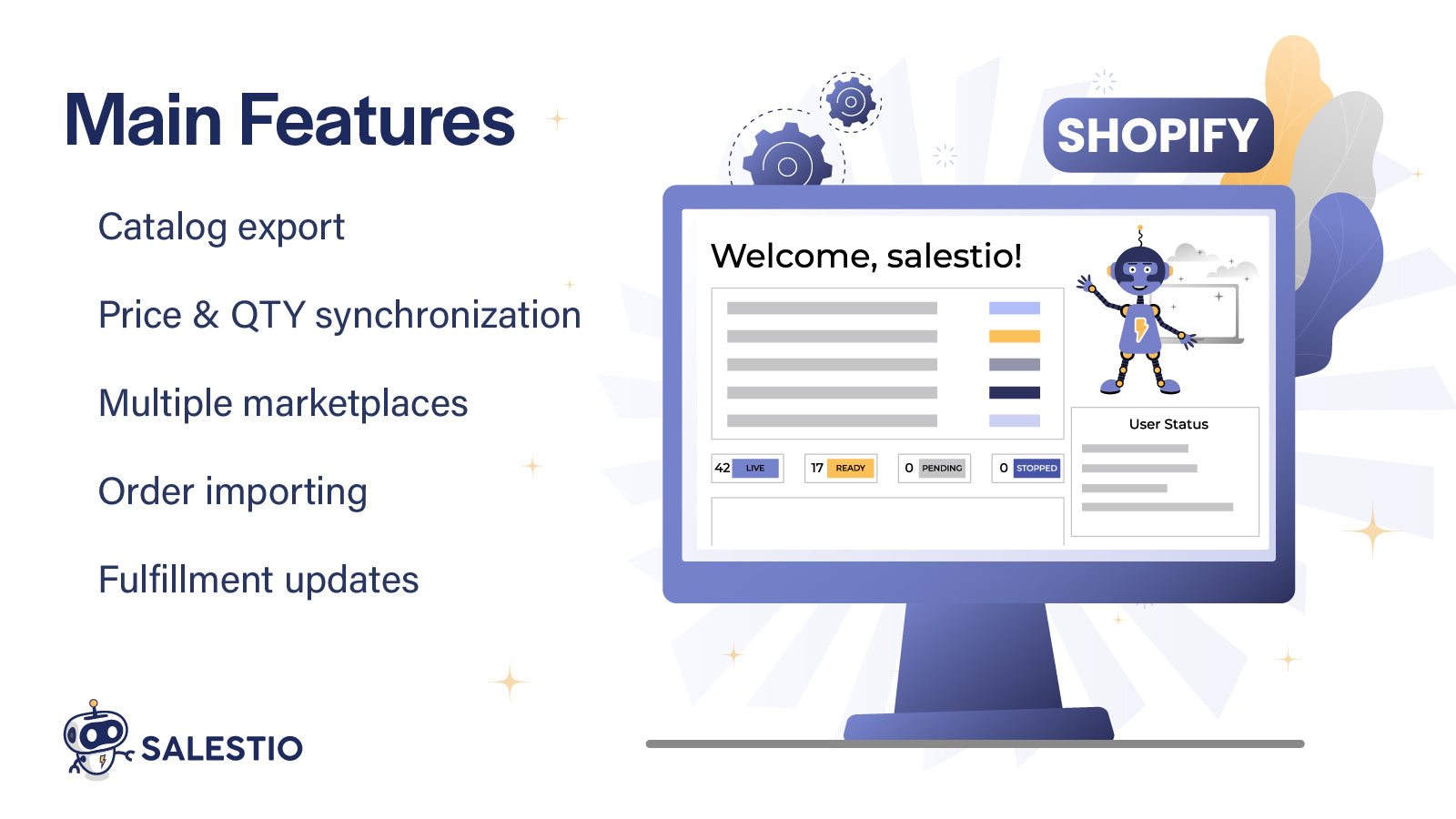
Salestio si integra nativamente con Shopware 5 e Shopware 6, fornendo sincronizzazione in tempo reale di prodotti, inventario e ordini con Amazon, eBay ed Etsy. Elencato nello Store ufficiale di Shopware, utilizza un'architettura di plugin nativa di Shopware che rispetta il modello di dati e le convenzioni di estensione della piattaforma. Regole di prezzo, mappatura delle varianti e sincronizzazione dell'evasione degli ordini mantengono Shopware come catalogo principale per le operazioni multicanale. Questo lo rende l'opzione più strettamente integrata per i commercianti che desiderano che l'amministrazione di Shopware rimanga l'hub centrale.

Koongo
7.9/10Strumento multicanale basato su feed con oltre 40 connessioni marketplace e supporto Shopware.
Koongo adotta un approccio ampio basato su feed per la vendita multicanale, supportando Shopware con l'esportazione di feed di prodotti verso oltre 40 marketplace e motori di comparazione prezzi. Offre una copertura particolarmente forte dei marketplace europei, inclusi canali come Bol.com, Allegro e siti di comparazione regionali. Le regole di ottimizzazione e trasformazione dei feed consentono ai commercianti di personalizzare le inserzioni per canale. Il piano che acquisti è scelto in base alla frequenza di sincronizzazione, con articoli, ordini, negozi e marketplace extra fatturati come utilizzo aggiuntivo, quindi il costo reale dipende da quanto traffico generi. Si concentra anche meno sulla sincronizzazione dell'inventario in tempo reale e sulla gestione approfondita degli ordini rispetto agli strumenti nativi del negozio.
Visita Koongo →
Magnalister
7.8/10Connettore con sede in Germania con eccellente copertura dei marketplace europei per Shopware.
Magnalister è un connettore marketplace di origine tedesca con profonda integrazione Shopware per SW5 e SW6. Supporta marketplace europei che molti strumenti internazionali trascurano, inclusi Kaufland, Otto e Hood, rendendolo il leader del mercato DACH per la vendita multicanale Shopware. I piani vanno da €39 a €299 al mese IVA esclusa e sono misurati in base a caricamenti e ordini moltiplicati per il numero di marketplace, con €15–30 per ogni marketplace extra, quindi la fattura cresce con ogni canale aggiunto. La sua lunga storia nell'ecosistema e-commerce tedesco significa un forte supporto e documentazione locale.
Visita Magnalister →
CedCommerce
7.3/10Estensioni Shopware per marketplace per Amazon, eBay e altri canali.
CedCommerce offre estensioni Shopware per singoli marketplace, con ogni modulo che fornisce funzionalità specifiche per il marketplace. Le loro estensioni per Shopware 5 sono più mature, mentre il supporto per Shopware 6 è più limitato in confronto. Ogni canale richiede una configurazione e un abbonamento separati, il che può aggiungere complessità per i commercianti che vendono su più marketplace. L'approccio per estensione funziona meglio quando hai bisogno solo di una o due connessioni marketplace.
Visita CedCommerce →
Linnworks
7.0/10Piattaforma di gestione magazzino e ordini aziendale con connessioni a marketplace e Shopware.
Linnworks è un sistema di gestione del magazzino autonomo che si connette a Shopware tramite un connettore dedicato, centralizzando l'inventario e l'elaborazione degli ordini al di fuori di Shopware. Aggiunge flussi di lavoro di picking, packing e spedizione che le pure integrazioni marketplace non forniscono. Per i commercianti con operazioni di evasione degli ordini complesse, funge da hub operativo mentre Shopware gestisce la vetrina. Il compromesso è che gli ordini vengono gestiti in Linnworks anziché nell'amministrazione di Shopware.
Visita Linnworks →Tabella di Confronto delle Funzionalità
Specifiche affiancate che i veri acquirenti confrontano
| Funzionalità | Salestio | Koongo | Magnalister | CedCommerce | Linnworks |
|---|---|---|---|---|---|
| Marketplace supportati | Amazon, eBay, Etsy | Oltre 40 inclusi Amazon, eBay, Etsy | Amazon, eBay, Etsy, Kaufland, Otto | Amazon, eBay, Etsy, Walmart, +altri | Amazon, eBay, Etsy, +molti altri |
| Tipo di sincronizzazione | Bidirezionale, in tempo reale | Feed unidirezionale + importazione ordini di base | Bidirezionale | Unidirezionale + importazione ordini per modulo | Bidirezionale |
| Importazione ordini su Shopware | Sì, direttamente | Importazione di base | Sì, direttamente | Base, per modulo | No; ordini in Linnworks |
| Regole di prezzo | Markup/markdown per marketplace | Regole di prezzo a livello di feed | Regole per marketplace | Regole per modulo | Ripricing avanzato |
| Velocità di sincronizzazione dell'inventario | Quasi in tempo reale (<5 min) | Intervalli di 30-60 min | Intervalli di 15-30 min | Varia in base al modulo | Quasi in tempo reale |
| Supporto Shopware 6 | Sì | Sì | Sì | Limitato | Tramite connettore |
| Supporto per i marketplace europei | Amazon EU, eBay EU | Forte copertura UE | Eccellente copertura DACH | Supporto UE per modulo | Ampia copertura UE |
| Supporto multivaluta | Sì | Base | Sì (focus EUR) | Per modulo | Sì |
| Prova gratuita | Sì, 14 giorni | Prova di 30 giorni | Prova di 30 giorni | Prova per modulo | Demo richiesta |
| Modello di prezzo | Ordini/mese ($29 / $79 / $199 / $299, eccedenza con tetto) | Livello di frequenza di sincronizzazione + costi di utilizzo | Per marketplace, €39–€299/mese IVA esclusa | Per app marketplace | Volume ordini; non pubblicato |
Come Scegliere lo Strumento Giusto
- Verifica che lo strumento supporti la tua versione di Shopware. Shopware 5 e Shopware 6 hanno architetture fondamentalmente diverse e non tutti gli strumenti supportano entrambe. Alcuni supportano Shopware 6 con meno profondità rispetto a Shopware 5.
- I commercianti Shopware spesso vendono nei mercati europei, quindi dai priorità agli strumenti con un forte supporto per i marketplace dell'UE. Magnalister e Koongo coprono Kaufland, Otto e Bol.com, che molti strumenti focalizzati sugli Stati Uniti non includono.
- Considera se vuoi che Shopware rimanga il tuo hub operativo (Salestio, Magnalister) o se sei disposto ad adottare un sistema esterno per la gestione degli ordini (Linnworks). Questa è una decisione fondamentale per il flusso di lavoro.
- Valuta il supporto in lingua tedesca e la qualità della documentazione. Per i commercianti con sede in DACH, strumenti come Magnalister e Salestio offrono interfacce e supporto in lingua tedesca, il che è importante per le operazioni quotidiane.
- Testa l'integrazione con i tuoi attuali tipi di prodotto Shopware (varianti, proprietà, configuratori) durante la prova gratuita di 14 giorni e valuta ogni opzione al volume che effettivamente gestisci. A circa 500 ordini marketplace al mese, Salestio Growth costa $79 e include 5 account marketplace, 10.000 prodotti e sincronizzazione ogni 15 minuti; gli ordini extra sono fatturati per ordine (da $0,15 su Starter a $0,04 su Scale e Ultimate) e con un tetto di eccedenza, quindi il caso peggiore per Growth è $199. Magnalister misura per marketplace a €39–€299 al mese IVA esclusa, Koongo fattura l'utilizzo in aggiunta al suo piano base e Linnworks non pubblica affatto i prezzi. Il modello di prodotto di Shopware differisce da quello di Shopify e non tutti gli strumenti gestiscono questa mappatura in modo altrettanto efficace.
Domande Frequenti
Fonti e riferimenti
Fonti esterne utilizzate in questa guida
- Salestio: Integrazione Amazon, eBay, Etsy sul negozio Shopware [Inserzione nell'app store]
- Recensioni e valutazioni di Salestio su G2 [Recensioni indipendenti]
- Prezzi, alternative e altro su Salestio su Capterra [Recensioni indipendenti]
- Koongo: Piattaforma di integrazione Marketplace [Sito web del competitor]
- Magnalister: Plugin Marketplace per Shopware [Sito web del competitor]
- CedCommerce: Integrazione Marketplace Multicanale [Sito web del competitor]
- Linnworks: Operazioni di Commercio Connesso [Sito web del competitor]
- Documentazione Salestio: Configurazione dell'integrazione Shopware [Documentazione del prodotto]
- Shopware Community Store [Marketplace della piattaforma]
- Documentazione per sviluppatori Amazon SP-API [Documentazione api]
- Documentazione API REST di eBay [Documentazione api]
Pronto a connettere Shopware con Amazon, eBay ed Etsy?
Inizia la tua prova gratuita di 14 giorni di Salestio e sincronizza il tuo catalogo Shopware con i principali marketplace in pochi minuti. Piani basati sugli ordini pubblicati a partire da $29/mese, mensili, annullabili in qualsiasi momento, e gli stessi piani si applicano su Shopify, BigCommerce, WooCommerce e PrestaShop.