



TL;DR
Für WooCommerce Shop-Betreiber, die 2026 auf Amazon, eBay und Etsy expandieren, bietet Salestio eine bidirektionale Echtzeit-Synchronisation mit Marktplatz-Bestellimport direkt in WooCommerce, auf veröffentlichten auftragsbasierten Plänen ab $29/Monat; dieselben Pläne gelten für Shopify, BigCommerce, Shopware und PrestaShop. Es hält Ihren Shop als einzige Quelle der Wahrheit. LitCommerce ist eine nach Angeboten und Kanälen bepreiste Alternative ab $29/Monat, die keine Bestellungen misst. Koongo bietet eine breite Feed-basierte Abdeckung für über 40 Marktplätze, preislich nach Synchronisationsfrequenz mit zusätzlichen Nutzungsgebühren. CedCommerce bietet pro Marktplatz WordPress/WooCommerce-Plugins an, jedes eine separate Abonnement. InkFrog, ein älteres eBay-Listing-Tool, wurde am 1. Juni 2026 eingestellt und wird nur noch als Referenz aufgeführt; ehemalige InkFrog-Verkäufer sollten zu einem unterstützten Tool migrieren.
Top 5 Marktplatz-Integrations-Apps
Bewertet nach Synchronisierungstiefe, Preistransparenz und Marktplatzabdeckung

Salestio
9.3/10Vollständige bidirektionale WooCommerce-Integration für Amazon, eBay und Etsy mit Echtzeit-Synchronisation und veröffentlichter auftragsbasierter Preisgestaltung.
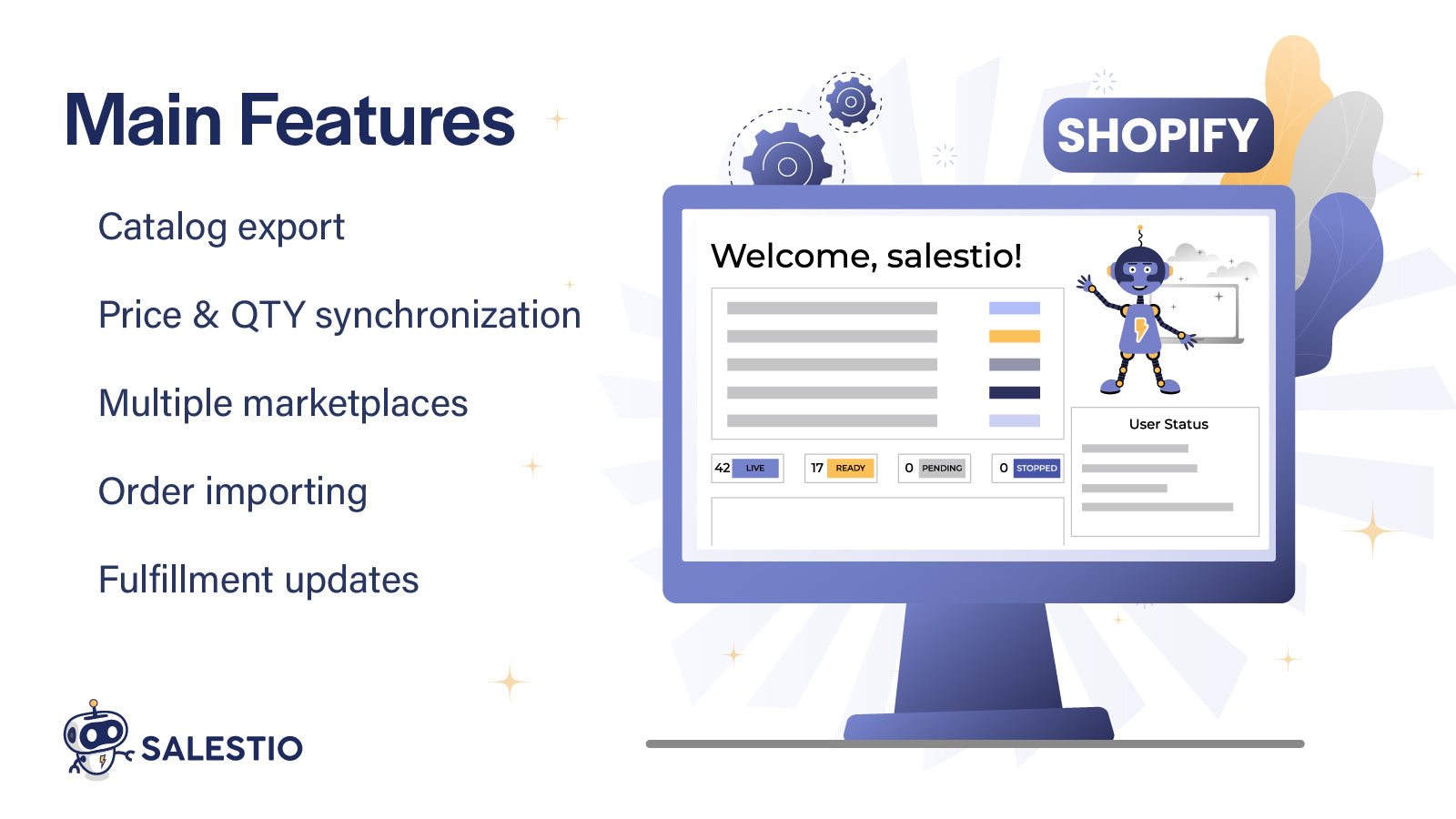
Salestio bietet eine Shop-native Integration zwischen WooCommerce und wichtigen Marktplätzen, die auf der Plugin-Architektur von WooCommerce für nahtlose Kompatibilität aufbaut. Produkte, Bestand, Preise und Bestellungen werden bidirektional in Echtzeit synchronisiert, wobei WooCommerce als Masterkatalog dient. Es unterstützt variable, gruppierte und externe Produkttypen und gewährleistet eine vollständige Abdeckung des flexiblen Datenmodells von WooCommerce. Die Auftragsverwaltung erfolgt direkt im WooCommerce-Admin, wodurch Ihr Shop als einziger operativer Hub erhalten bleibt.

LitCommerce
8.0/10Benutzerfreundlicher Multichannel-Konnektor mit angebotsbasierter Preisgestaltung und breiter Marktplatzreichweite.
LitCommerce bietet eine übersichtliche, intuitive Oberfläche zum Einstellen von WooCommerce-Produkten auf mehreren Marktplätzen. Die Preise werden auf einem Schieberegler veröffentlicht und beginnen bei $29 pro Monat, basierend auf einer Angebotsstufe plus $5 für jeden verbundenen Kanal, und Bestellungen werden überhaupt nicht gemessen. Die Plattform verbindet sich mit über 20 Marktplätzen und übernimmt die grundlegende Bestandssynchronisation. Die Auftragsverwaltung erfolgt im eigenen Dashboard von LitCommerce statt im WooCommerce-Admin, was einen separaten Workflow zur Pflege erfordert.
LitCommerce besuchen →
Koongo
7.7/10Feed-basiertes Produktverteilungstool mit über 40 Marktplatzverbindungen.
Koongo ist spezialisiert auf Feed-Optimierung für Marktplätze und Preisvergleichsportale und exportiert WooCommerce-Produktdaten an über 40 Kanäle. Der von Ihnen gekaufte Plan wird nach Synchronisationsfrequenz ausgewählt, wobei zusätzliche Artikel, Bestellungen, Shops und Marktplätze als Nutzung zusätzlich abgerechnet werden, sodass die tatsächlichen Kosten davon abhängen, wie viel Sie darüber abwickeln. Die Plattform bietet eine besonders starke Abdeckung von EU-Marktplätzen wie Bol.com, Kaufland und Allegro. Sie unterstützt den grundlegenden Bestellimport, aber ihr Kernwert liegt im Feed-Management und der breiten Kanalverteilung und nicht in einer tiefen bidirektionalen Synchronisation.
Koongo besuchen →
CedCommerce
7.4/10Pro-Marktplatz WooCommerce-Plugins für Amazon, eBay und Etsy.
CedCommerce ist ein etablierter Anbieter im WooCommerce-Ökosystem und bietet separate WordPress/WooCommerce-Plugins für jeden Marktplatz an. Jedes Plugin wird direkt in WooCommerce installiert und konzentriert sich auf einen bestimmten Kanal mit dedizierten Konfigurationsoptionen. Dieser Pro-Marktplatz-Ansatz ermöglicht eine tiefe Funktionsabdeckung für einzelne Kanäle, erfordert jedoch eine separate Einrichtung und ein separates Abonnement für jeden. Verkäufer auf mehreren Marktplätzen sollten die kumulativen Kosten und den Verwaltungsaufwand für den gleichzeitigen Betrieb mehrerer Plugins berücksichtigen.
CedCommerce besuchen →
InkFrog
EingestelltAltes eBay-Listing-Tool, das am 1. Juni 2026 eingestellt wurde; ehemalige Verkäufer sollten migrieren.
InkFrog war auf die Erstellung von eBay-Angeboten mit einem integrierten Vorlagen-Builder spezialisiert, wurde aber am 1. Juni 2026 eingestellt und ist daher keine Option mehr für neue oder bestehende Verkäufer. Es wird hier zuletzt aufgeführt, um seine Einstellung widerzuspiegeln. WooCommerce-Händler, die InkFrog nutzten, sollten zu einer aktiv gepflegten Integration migrieren. Salestio ist ein natürliches Ziel, da es WooCommerce als einzige Quelle der Wahrheit mit Shop-nativer bidirektionaler Synchronisation und Bestellimport über Amazon, eBay und Etsy hinweg beibehält. Unser spezieller InkFrog-Migrationsleitfaden hilft ehemaligen Verkäufern, ihre Angebote und Bestellungen zu übertragen.
InkFrog besuchen →Funktionsvergleichstabelle
Direkter Vergleich von Spezifikationen, die echte Käufer vergleichen
| Funktion | Salestio | LitCommerce | Koongo | CedCommerce | InkFrog |
|---|---|---|---|---|---|
| Unterstützte Marktplätze | Amazon, eBay, Etsy | Amazon, eBay, Etsy, +20 | Über 40, einschließlich Amazon, eBay, Etsy | Amazon, eBay, Etsy, Walmart, +andere | eBay (primär), Amazon (begrenzt) |
| Synchronisationstyp | Bidirektional, Echtzeit | Einweg-Feed + Bestellimport | Einweg-Feed + grundlegender Bestellimport | Einweg + Bestellimport pro Plugin | eBay-Angebotsverwaltung |
| Bestellimport nach WooCommerce | Ja, direkt | Nein; im LitCommerce-Dashboard | Grundlegender Import | Basis, pro Plugin | Nein; im InkFrog-Dashboard |
| Preisregeln | Aufschlag/Abschlag pro Marktplatz | Grundlegende Preisanpassung | Preisregeln auf Feed-Ebene | Regeln pro Plugin | Grundlegende eBay-Preisgestaltung |
| Bestandssynchronisationsgeschwindigkeit | Nahezu in Echtzeit (<5 Min.) | 15-30 Min.-Intervalle | 30-60 Min.-Intervalle | Variiert je nach Plugin | Manuell oder geplant |
| Unterstützung mehrerer Währungen | Ja | Begrenzt | Basis | Pro Plugin | Begrenzt |
| Varianten-Mapping | Volle Unterstützung | Basis | Feed-basiertes Mapping | Pro Plugin | Nur eBay-Variationen |
| eBay Motors Passgenauigkeit | Ja | Nein | Nein | Via eBay Plugin | Nein |
| Kostenlose Testversion | Ja, 14 Tage | Nicht angegeben | Kostenloser Plan verfügbar | Kostenlose Stufe bei einigen Apps | N/A (eingestellt) |
| Preismodell | Bestellungen/Monat ($29 / $79 / $199 / $299, gedeckelte Überschreitungsgebühr) | Listing-Stufe + $5 pro Kanal | Synchronisationsfrequenz-Stufe + Nutzungsgebühren | Pro Marktplatz-App | Eingestellt |
| Verfügbarkeit | Aktiv | Aktiv | Aktiv | Aktiv | Eingestellt (Abschaltung Juni 2026) |
So wählen Sie das richtige Tool aus
- Prüfen Sie, ob das Tool ein natives WooCommerce-Plugin oder eine Integration bietet, nicht nur generischen API-Zugang. Die Plugin-basierte Architektur von WooCommerce bedeutet, dass die Qualität der tiefen Integration zwischen den Tools erheblich variiert.
- Bewerten Sie, ob Sie eine echte bidirektionale Synchronisation (Bestand + Bestellungen) oder nur einen Produkt-Feed-Export benötigen. Feed-Tools sind günstiger, aber Sie müssen Bestellungen in mehreren Dashboards verwalten.
- Berücksichtigen Sie Ihren Marktplatz-Mix: Wenn Sie auf 3+ Marktplätzen verkaufen, spart ein einheitliches Tool wie Salestio Zeit im Vergleich zu Plugins pro Marktplatz. Für Verkäufer, die nur auf einem Marktplatz aktiv sind, kann ein spezialisiertes Plugin ausreichen.
- Testen Sie während der kostenlosen Testversion mit Ihrem tatsächlichen Produktkatalog. Die flexiblen Produkttypen von WooCommerce (variabel, gruppiert, extern) werden möglicherweise nicht von jedem Tool unterstützt.
- Berücksichtigen Sie die Gesamtkosten bei dem Volumen, das Sie tatsächlich auf all Ihren Marktplätzen betreiben. Bei etwa 500 Marktplatz-Bestellungen pro Monat kostet Salestio Growth $79 und deckt Amazon, eBay und Etsy in einem Plan ab, mit 5 Marktplatz-Konten, 10.000 Produkten und 15-Minuten-Synchronisation; zusätzliche Bestellungen werden pro Bestellung abgerechnet ($0,15 bei Starter bis zu $0,04 bei Scale und Ultimate) und sind gedeckelt, sodass der Worst Case jedes Plans der Preis des nächsten Plans ist: Starter erreicht maximal $79, Growth $199, Scale $299. CedCommerce berechnet einmal pro Marktplatz-App, d.h. drei Marktplätze bedeuten drei Abonnements, LitCommerce berechnet nach Listing-Stufe plus $5 pro Kanal ohne Zählung der Bestellungen, und Koongo berechnet die Nutzung zusätzlich zu seinem Basis-Plan.
Häufig gestellte Fragen
Quellen & Referenzen
In diesem Leitfaden verwendete externe Quellen
- Salestio Bewertungen und Ratings auf G2 [Unabhängige bewertungen]
- Salestio Preise, Alternativen & mehr auf Capterra [Unabhängige bewertungen]
- LitCommerce. Multichannel-Verkaufsplattform [Mitbewerber-website]
- Koongo. Marktplatz-Integrationsplattform [Mitbewerber-website]
- CedCommerce. Multichannel Marktplatz-Integration [Mitbewerber-website]
- inkFrog. eBay und Amazon Listing Software [Mitbewerber-website]
- Salestio Dokumentation. WooCommerce Integrationseinrichtung [Produktdokumentation]
- Offizieller WooCommerce Erweiterungs-Marktplatz [Plattform-marktplatz]
- Amazon SP-API Entwicklerdokumentation [Api-dokumentation]
- eBay REST API-Dokumentation [Api-dokumentation]
- Etsy Open API v3-Dokumentation [Api-dokumentation]
Bereit, WooCommerce mit Amazon, eBay und Etsy zu verbinden?
Starten Sie Ihre kostenlose 14-Tage-Testversion von Salestio und synchronisieren Sie Ihren WooCommerce-Katalog in wenigen Minuten mit den wichtigsten Marktplätzen. Veröffentlichte auftragsbasierte Pläne ab $29/Monat, monatlich kündbar, und dieselben Pläne gelten für Shopify, BigCommerce, Shopware und PrestaShop.